Mostrando entradas con la etiqueta assignment. Mostrar todas las entradas

viernes, 10 de mayo de 2013

Assessment (part 2)


Hi again!!

This post will be dedicated to the second short story I’ve chosen for my course assignment. It is “Jack and the Beanstalk”, a fairy tale that you can find in the collection English Fairy Tales by Flora Annie Steel; the same anthology I used for the other short story that I presented, “Tattercoats”.

In this case, I’m going to present some actual and post-teaching activities in which I will focus mainly on reading comprehension, vocabulary and storytelling. The story is intended to 4th of ESO students and in order to carry out the activities, they will have to split into groups of 4 people. 

In contrast to the work carried out in the other short story proposed, in which I promoted collaborative learning, now students will be asked to work cooperatively so they will be a part of a team in which each member has a specific role to fulfill, a specific task that will be an essential part of the whole task in the end. The purpose of it is to promote responsibility and autonomous learning, so they will increase personal skills together with linguistic skills. Digital skills will be also encouraged by the use of digital tools as learning strategies. Other strategies used are searching for information, and differentiation between main ideas and details.

As a final point, they will have to create a blog with Kidblog. I have already introduced you this tool in another post; it allows students to publish posts and participate in academic discussions within a secure classroom blogging community, and the most important, teachers maintain complete control over student blogs and user accounts, so I find this alternative very useful to encourage writing and autonomous skills.


Actual Activities

1. Find words or expressions in the story to show that these sentences are false. Each member will answer two of the statements and then they will put all the work together.

- Jack’s father was a very strong man
- Milky-white the cow always gave loads of milk
The queer little old man wanted to exchange Jack’s cow for 5 common lentils
Jack’s mother threw all the queer man gave to him out of the window
Jack went up to the sky with a ladder
The ogre’s wife didn’t give Jack anything for breakfast
Jack took the ogre’s hen and it laid a very beautiful egg
The orgre catched Jack when he was escaping with his magic harp

2. As you have been looking for the answers of number 1, you should have looked up for new words on the dictionary. Now, each member will provide his/her words, together with the words that you think are important to understand the story, and with all the bunch of words, you will create a single word cloud.

3. With the use of a digital tool called Character Scrapbook, you will have to analyse all the characters of the story. There are 4 characters, so each team member will have one character to evaluate. You will have to follow the indications provided in order to complete the different section:

Ten things I know about the character
Ten words that describe him/her
Ten details about his/her appearance
Ten facts about his/her personality
Ten challenges he/she faced
Ten accomplishments he/she achieved.

Once you complete your scrapbook, you can print (in pdf) each character’s description and put all the work together, so you will get a Jack and the Beanstalk characters' Scrapbook with all the characters of the book analysed.

Post-Activities

    1. As an extension activity, you will have to think the 4 most important scenes of the story through which the whole plot would be understood (the first scene is the exchange of belongings between the queer old man and Jack, and the other 3 important scenes take place in the ogre’s white house).  
    When you have decided the scenes, each member of the team will have to represent one of those scenes by using the Kerproof digital tool. You can represent them by making a movie or telling a story, that's your choice. But, the important thing is that when all the scenes are created, another person has to be able to watch or read them in order and understand the story without more details.

   2. The final activity will be the creation of a personal blog using Kidblog, in which, individually, you will have to tell all the activities you have completed by working on “Jack and the Beanstalk” fairy tale, together with your reflections and feedback. 


      So, this is it!!! Hope you enjoyed with my activities!! see you soon!!


Resources

- Word cloud creator: http://www.wordle.net/
- Making a movie or telling a story: http://www.kerpoof.com/
- Blog: http://kidblog.org/home/


jueves, 9 de mayo de 2013

Assessment (part 1)


Hi there!!

Today I’m going to introduce the assessment part of the course I’ve been presenting you these days, which would be related to short stories teaching. In order to carry out the assessment, we have to choose 2 short stories and design some activities by ourselves that can be directed to the pre-, actual or post-teaching part of the task.  

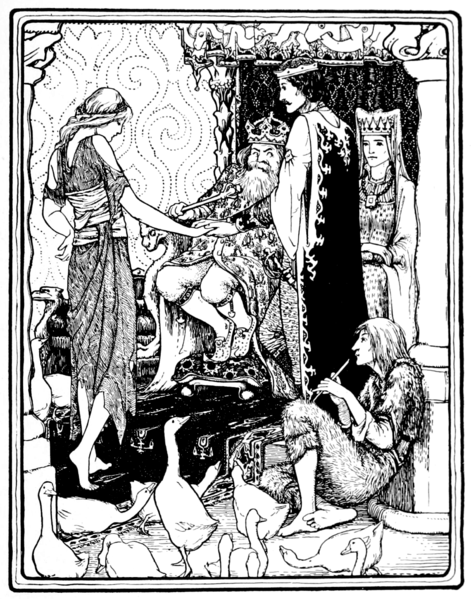
The first short story I’ve chosen is Tattercoatsa fairy tale that you can find in the collection English Fairy Tales by Flora Annie SteelI’m going to present some pre-and post-activities for this story which will be intended to 4th of ESO students. They will have to make groups of 5 people each one in order to work in a collaborative way through all the pre-teaching part. In this way, they will be able to learn about some English writers, about fairy tales as a literary genre and to get a gist of this short story before reading it. I will try to promote collaborative work within a groupwork; students will have to discuss, comment everything and decide their answers as a group, so they will have to negotiate and come to an agreement.  


After that, I will also present some activities for the post-teaching part. In contrast, these activities will be focused on individual work, in order to increase personal skills and personal responsibility. I will propose the game strategy with the use of an interactive game in which different activities are created around different learning styles, as visual or auditory. For this reason, listening comprehension is also emphasized during the activities, but students will also increase their writing abilities since they will have to write different answers using their own words. What's more, they will learn the different elements of a story in English, and this could be considered as a cross-curricular learning, given that these elements are taught in previous years in mother tongue classes.


On the whole, the PURPOSE is to facilitate learners’ communicative competence in English through the use of literature. They will develop linguistic, communicative, personal and social skills, together with the increase of their digital skills, with the use of digital tools as learning strategies. Other strategies used are searching for information, clarification of terms or guessing information. 

Pre-Activities

1.      “Tattercoats” is an English fairy tale found in several picture books and in various collections, so your task here will be to click on each author and tell us in 2 lines the most important facts about his o her life as an English writer.

-          Margaret Greaves, Tattercoats, 1990
-         Flora Annie Steel, Tattercoats, English Fairy Tales, 1918
-         Joseph Jacobs, Tattercoats, More English Fairy Tales, 1890

2.      Did you know what a fairy tale is? Could you explain it in your own words now?

3.      Do you know the meaning of the short story’s title? This word has become old-fashioned, could you guess the corresponding word we would use nowadays?

      Definition: The term "tattercoats" means more than merely "homeless people", although all beggars are automatically tattercoats (the original meaning of the word was "beggar or habitual lying-in-the-street drunk"). It refers to all "ne'er-do-wells" or undesirables, and it is also a polite way of referring to what a slightly tipsy, and therefore loose-tongued.

4.      Which is the collections’ hardcover for each one? Could you design your own hardcover of this short story? you can use the option "make a picture" in the webpage Kerproof.


5.      Here you have a short overview of the story, could you guess what is going to happen? Could she finally go to the ball?

Ragged Tattercoats lived in the kitchen of her grandfather's castle. She had hardly any friends and no freedom. Although she loved to dance, she was not allowed to go to the ball.

6.      Now that you have already imagined a possible story, you can check if your ideas have been the correct ones with this Tattercoats’ video.

7.      Finally, you will have to create a Glogster using all the information you have already got and it would be like a way of presenting this short story to other people. Here you have an example of Glogster about the English writer Roald Dahl so, be creative and design your own one!!!


Post-Activities

Extension work: Connections with Tattercoats: Ciderella


One of the most well-known stories ever written is Cinderella, a tale that all of you know about. Variations on Cinderella's myth appear in folktales in almost every world culture: she's known as "Yeh-Shen" in China, "The Rough-Face Girl" to the Algonquin Indians of North America, "Chinye" and "Nyasha" to the people of Africa, "Cenerentola" to Rossini and "Tattercoats" in England.
While these versions vary in some degree, the general tale usually centers on a kind, but oppressed character persecuted by the step-family. Typically, the father is either neglectful or absent; consequently, Cinderella must rely on a magical guardian for assistance in achieving her deepest wish.

Therefore, working individually on the English lab, you will establish similarities between these two fairy tales, but at the same time, you will study the different elements of a story, all thanks to this interactive game. The answers about the following Tattercoats' questions will be done in a worksheet.

1.   The first step would be to listen again to the story of Ciderella in case you don’t remember it, by clicking on Cinderella.

2.   After that, you will learn what the setting is in a story, by clicking on setting. Here, you will have to choose Cinderella’s setting and after that you will write what the Tattercoats’ setting is in the provided worksheet.

3.  Now, you will work on the characters. You will have to choose who the characters are in Cinderella’s story, who the hero is, and who the villain is. After that, you will do the same in Tattercoats’ worksheet.

4.    Next, the sequence part comes, in which you will just order Cinderella’s story.

5.   After that, it is presented the exposition. You will have to choose Cinderella’s exposition and create the Tattercoats’ exposition in the worksheet.

6.   The following activity will consist of deciding which Cinderella’s conflict is and to write by your own what you think it is Tattercoat’s conflict.

7.   Then, you will also have to decide which Cinderella’s climax is and write by your own what you think it is Tattercoat’s climax.

8.  In the final part, you will have to choose Cinderella’s resolution and write by yourself Tattercoast’s resolution.


Resources


Interactives: